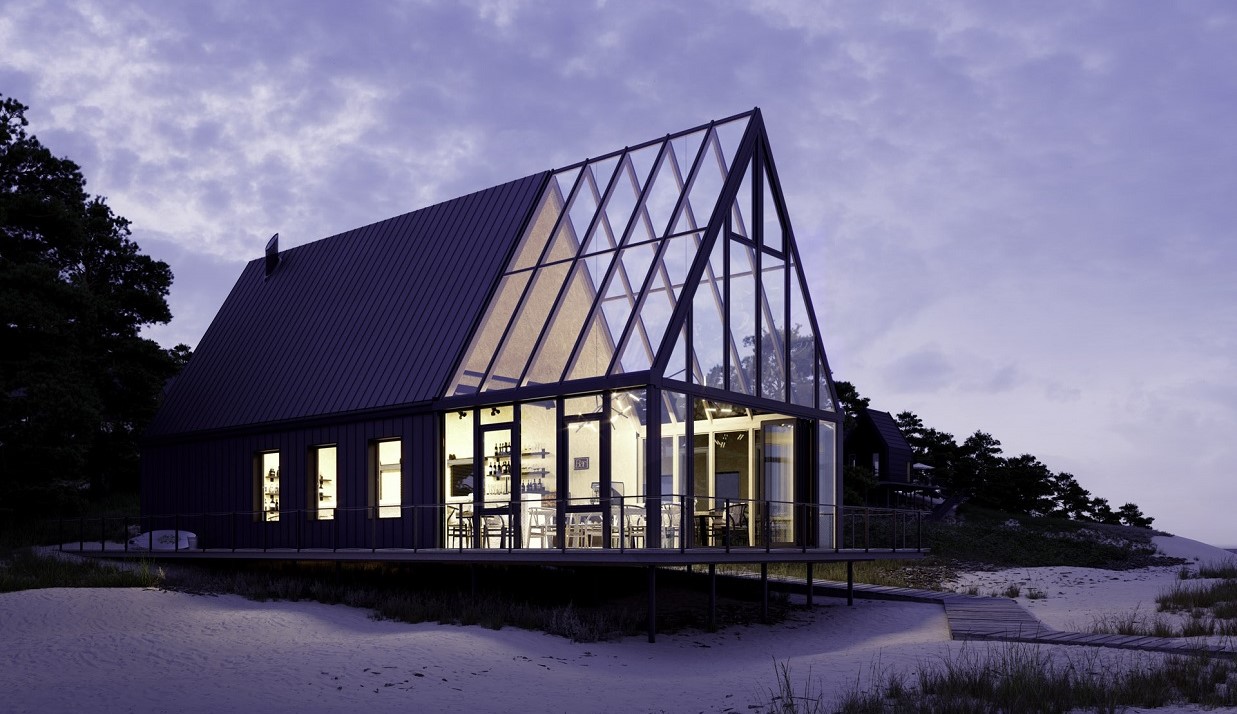
Glass canopies: shade and shelter without losing the light
A canopy keeps the worst of the weather and the highest summer sun off a terrace, without putting the garden behind it into shade. How they are specified.
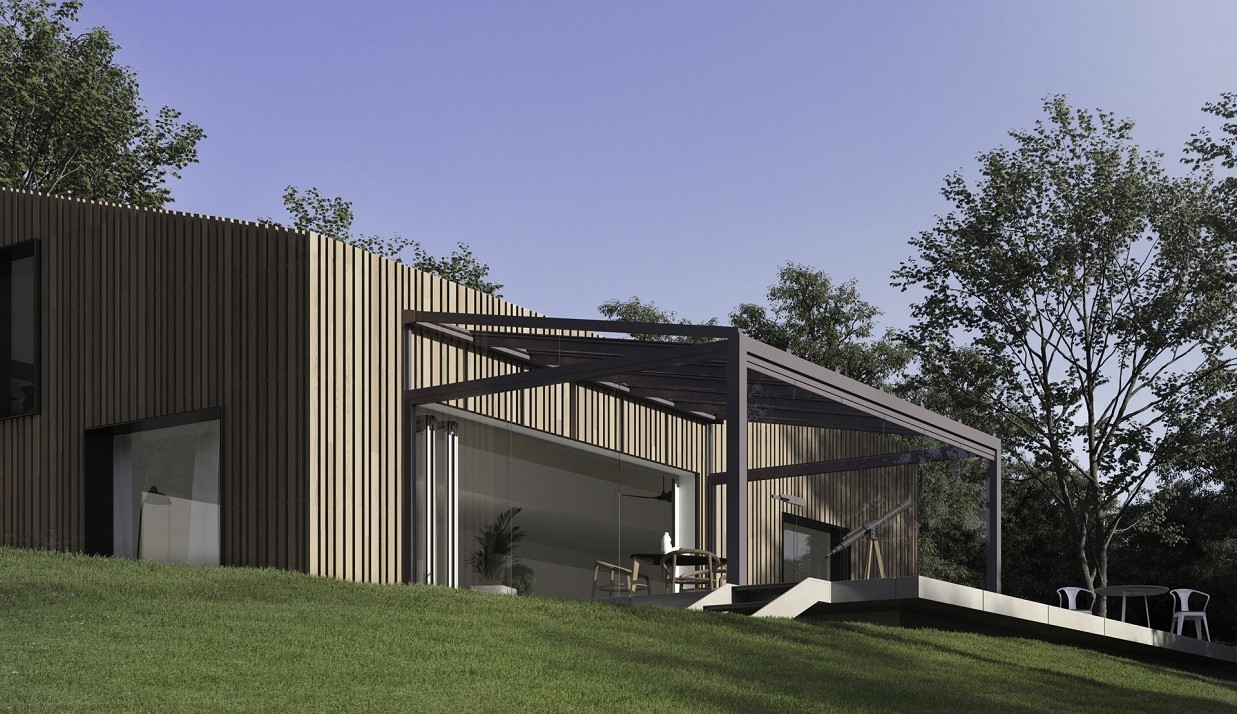
- A glass canopy cuts direct sun while keeping daylight in the room behind it.
- Drainage and wind uplift decide how a canopy is fixed, not the glass.
- Brackets, beams and fixings are the parts that date badly, so specify them properly.
A glass canopy does one job well: it keeps the worst of the weather and the highest summer sun off a terrace or a set of doors, without putting the garden into shade.
What it changes
Summer sun is high in the middle of the day and low in the evening. A fixed canopy cuts the direct midday sun and leaves the room behind it brighter than an internal blind, which only stops the glare once the heat is already inside.
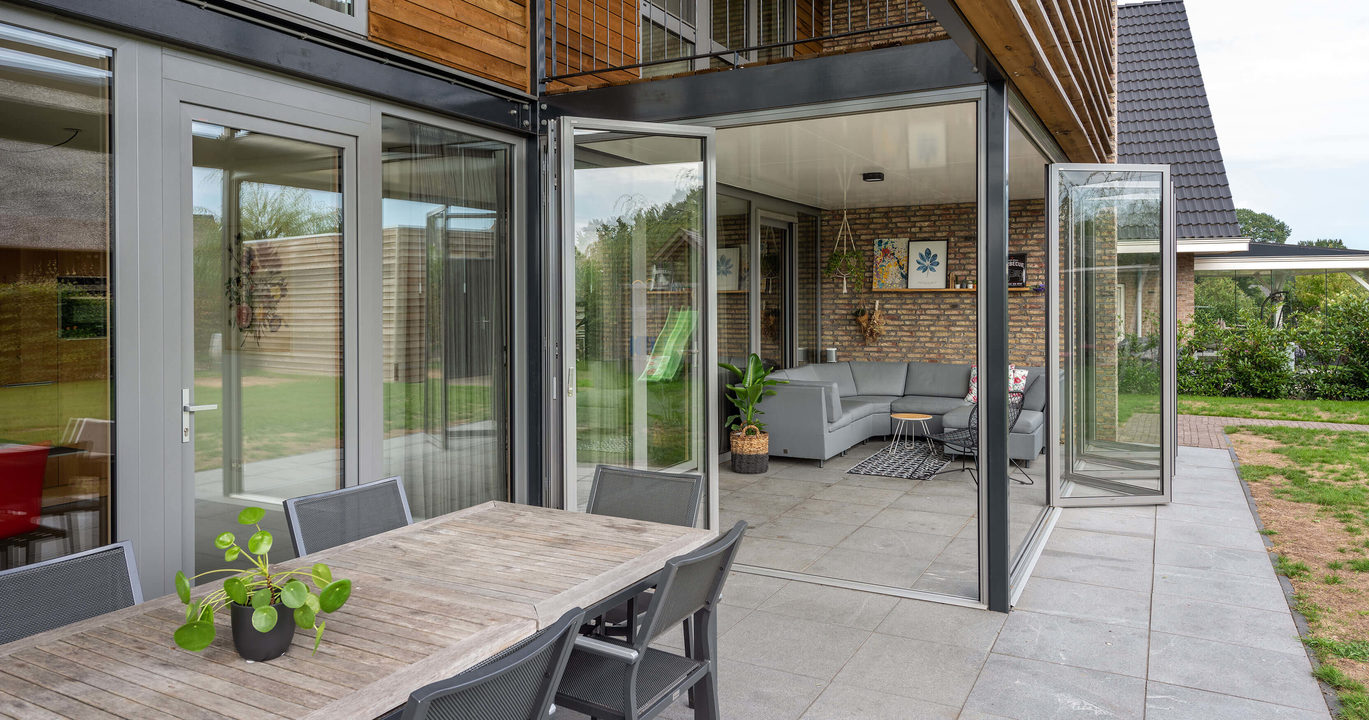
Sitting over bi-folding or sliding doors, it also keeps rain off the threshold, which is where most water ingress begins.
Structure and drainage
Glass is heavy, so a canopy is really a structural question. It needs beams that span without excessive deflection, brackets fixed back into sound masonry or a frame, and a fall towards a gutter and downpipe that does not discharge onto the doors below.
Slim posts, a hidden gutter and brackets finished to match the frames are the details that decide how it looks from the garden.
Glass and safety
Overhead glazing should be toughened, laminated, or both, and specified for the snow and wind loads of the site. Self-cleaning coatings reduce how often the glass needs cleaning, but they do not remove the need to clear the gutter.
Planning
A canopy is often covered by permitted development, but height limits, boundary distances and conservation area rules apply to it in exactly the same way as any other structure. Check before you order.
Written by the Minimal Frame Projects UK team. If you would like advice on a specific opening, send us the dimensions and a few photographs and we will come back with a specification.